
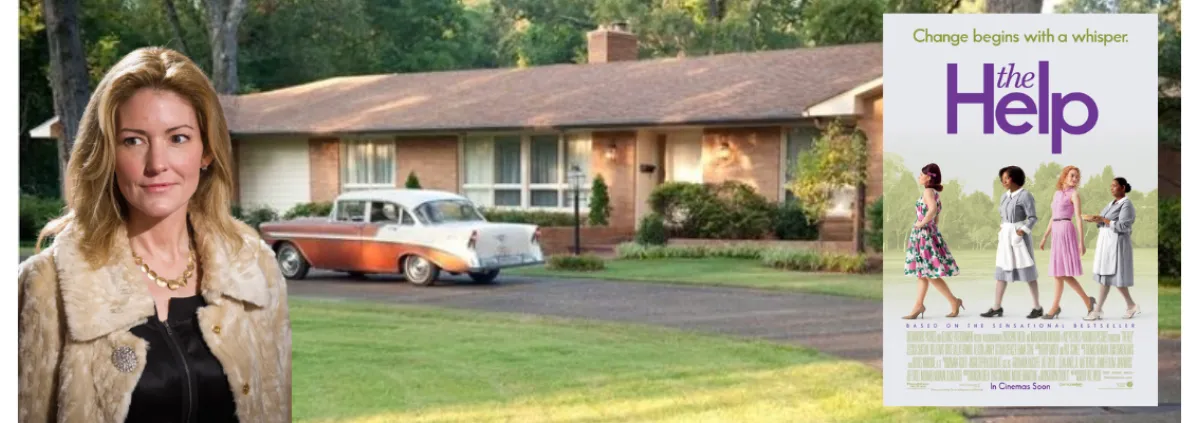
The Help is one of the more instructive publishing stories of the modern era — a reminder that the gap between a manuscript and a book in readers' hands is not always a reliable measure of the work's worth.
The novel spent more than one hundred weeks on the New York Times bestseller list, sell over fourteen million copies worldwide, and become a film that won an Academy Award.
Sixty Rejections
Kathryn Stockett received sixty rejection letters before a literary agent agreed to represent The Help.
Sixty!
Thankfully for us, the agent sold the story to publishers so we now have this book to read.
Personal Story
Stockett grew up in Jackson, Mississippi, where she was partly raised by a Black housekeeper named Demetrie. The Help is set in Jackson in the early 1960s. It is a novel written from deep personal geography, from a childhood spent in a place whose social arrangements she had absorbed before she was old enough to interrogate them — and from an adult determination to interrogate them anyway.
About The Help
Jackson, Mississippi, 1962. Eugenia Skeeter Phelan returns home from university with ambitions to be a writer and finds herself unable to ignore what she has begun to see clearly: the lives of the Black women who raise white children, clean white houses, and hold white families together, while being denied the most basic dignities. She begins, in secret and at considerable risk, to collect their stories. Aibileen Clark and Minny Jackson are the two women whose voices share the novel with Skeeter's — and it is their chapters, written in first person in their own distinct voices, that give the book its emotional weight.
The novel moves between comedy and danger with considerable skill. The social world of Jackson's white women — the Junior League, the bridge afternoons, the elaborate performance of Southern propriety — is rendered with a satirist's eye. But The Help never allows its reader to forget what underlies that world, or what it costs the women who service it.
The Making of the Book
Stockett began writing The Help after moving to New York and finding herself homesick — not for the racial arrangements of the Mississippi she had grown up in, but for the specific sensory world of her childhood and for the woman who had been central to it. Demetrie had died without Stockett ever having asked her what her life had actually been like. The novel is, in part, an attempt to reckon with that silence.
She wrote it over five years, submitting it to agents from 2005 onwards and collecting rejections until 2007, when agent Susan Ramer agreed to take it on. Even then, the road to publication was not straightforward. The novel that eventually appeared in 2009 had been revised extensively, and Stockett has spoken about the uncertainty she felt throughout the process about whether she had the right to tell these particular stories in these particular voices.
Adaptation and Conversation
The film adaptation, released in 2011 and directed by Tate Taylor, starred Emma Stone as Skeeter, Viola Davis as Aibileen, and Octavia Spencer as Minny. Spencer won the Academy Award for Best Supporting Actress. Davis was nominated for Best Actress. The film brought the novel's characters to an even wider audience while also intensifying the debate that had begun on publication: about who has the authority to tell which stories, about what it means for a white author to write in the voice of Black women, and about whether warmth and good intentions are sufficient to the subject.
Novel That Changed the Conversation
That conversation continues, and it is not a trivial one. The Help sits at a genuine intersection of questions about fiction, race, history, and representation that literary culture is still working through. Reading it with awareness of that context is part of reading it fully.
Why Readers Keep Coming Back
Whatever the critical arguments surrounding The Help, its readership has remained devoted. The novel's characters — particularly Aibileen and Minny — are drawn with warmth and specificity that transcends the novel's structural limitations. Its world is evoked with precision. And its insistence on making visible the labour and the dignity of women rendered officially invisible by the society around them has resonated with readers far beyond its specific historical setting.
Sixty rejection letters. Fourteen million readers. The story of The Help's journey to publication is almost as instructive as the novel itself.
A fantastic read, and yes, a lot of readers had a lot to say about this story, but it's heartbreaking to see these segregation issues.
See the movie but not read the book. Will check the book out.
"The Help" is one of my favourite books as it delves into social issues with grace and humor. I just finished "The Calamity Club", Kathryn's latest and I loved it too. I wish my books could make people laugh and chuckle while exposing the grit of humanity in a touching and memorable way.