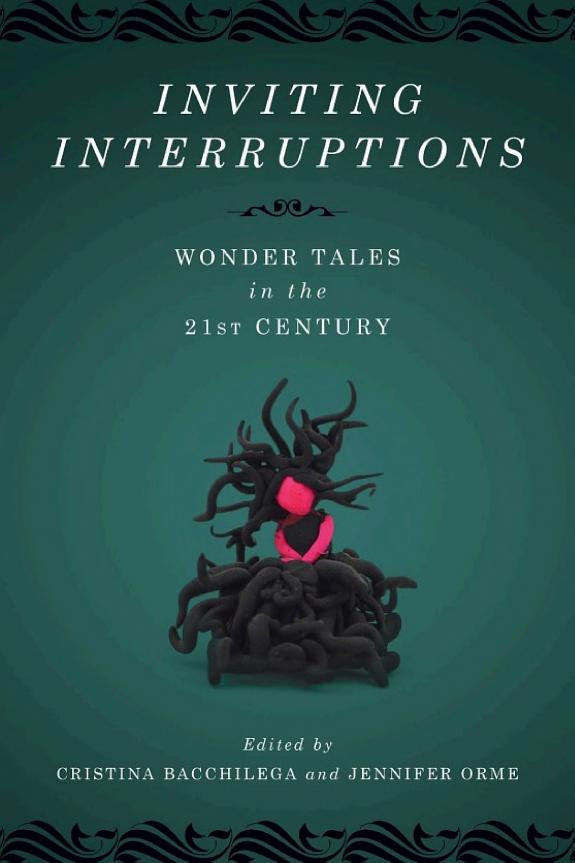
Inviting Interruptions: Wonder Tales in the Twenty-First Century
Wonder Tales in the Twenty-First Century
0 reviews
3
views
By Cristina Bacchilega, Jennifer Orme (2021)
Fairy-tale texts and images that address contemporary issues in unsettling, intersectional, and wondrous ways. Inviting Interruptions: Wonder Tales in the Twenty-First Century anthologizes contemporary stories, comics, and visual texts that intervene in a range of ways to challenge the popular perception of fairy tales as narratives offering heteronormative happy endings that support status-quo values. The materials collected in Inviting Interruptions address the many ways intersectional issues play out in terms of identity markers, such as race, ethnicity, class, and disability, and the forces that affect identity, such as non-normative sexualities, addiction, abuses of power, and forms of internalized self-hatred caused by any number of external pressures. But we also find celebration, whimsy, and beauty in these same texts—qualities intended to extend readers' enjoyment of and pleasure in the genre. Edited by Cristina Bacchilega and Jennifer Orme, the book is organized in two sections. "Inviting Interruptions" considers the invitation as an offer that must be accepted in order to participate, whether for good or ill. This section includes Emma Donoghue's literary retelling of "Hansel and Gretel," stills from David Kaplan's short Little Red Riding Hood film, Bryan Kamaoli Kuwada's story about stories rooted in Hawaiian tradition and land, and Shary Boyle, Shaun Tan, and Dan Taulapapa McMullin's interruptions of mainstream images of beauty-webs, commerce, and Natives. "Interrupting Invitations" contemplates the interruption as a survival mechanism to end a problem that has already been going on too long. This section includes reflections on migration and sexuality by Diriye Osman, Sofia Samatar, and Nalo Hopkinson; and invitations to rethink human and non-human relations in works by Anne Kamiya, Rosario Ferré, Veronica Schanoes, and Susanna Clark. Each text in the book is accompanied by an editors' note, which offers questions, critical resources, and other links for expanding the appreciation and resonance of the text. As we make our way deeper into the twenty-first century, wonder tales—and their critical analyses—will continue to interest and enchant general audiences, students, and scholars.

Reviews
Have you read this book?
Share a quick thought — even 1–2 sentences helps other readers.