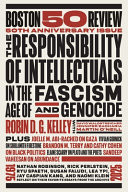
The Responsibility of Intellectuals in the Age of Fascism and Genocide
0 reviews
6
views
By Robin D. G. Kelley, Vivian Gornick, Elaine Scarry (2025)
This second issue of our fiftieth year features longtime contributors (including Robin D. G. Kelley, Vivian Gornick, and Elaine Scarry), newer voices in the magazine, and a celebration of classics from the archive. But more than simply a compilation of writing by authors we are privileged to work with, the issue reflects a conviction that has animated our work for decades: the daunting challenges we face must be met by collective thought and action. As a starting point, Kelley revisits Noam Chomsky's landmark essay, "The Responsibility of Intellectuals." Published in 1967 as the Vietnam War was rapidly escalating, Chomsky's injunction--"to speak the truth and to expose lies"--remains a powerful call to conscience, Kelley argues. But in the Vietnam era, the intellectuals supporting the war all believed that they were acting responsibly. Moreover, the privileges that Chomsky associated with intellectual life are in increasingly short supply. A campaign of McCarthyist repression has overtaken universities. Lies circulate unchecked, no matter how forcefully exposed. In these conditions, Kelley takes inspiration from the antifascist and anticolonial struggles of the 1930s and '40s--particularly from the Black radicals who refused and resisted complicity in their own age of fascism and genocide. Like them, he concludes, "we need to stand in solidarity and fight for others as if our lives depended on it." Historian David Waldstreicher, Palestinian human rights lawyer Jennifer Zacharia, and political philosopher Martin O'Neill expand on what this moment requires--not just of intellectuals, but of journalists and of us all.--Publisher's website.



Reviews
Have you read this book?
Share a quick thought — even 1–2 sentences helps other readers.