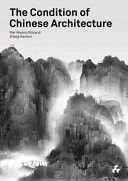
The Condition of Chinese Architecture
0 reviews
4
views
By Pier Alessio Rizzardi, Zhang Hankun (2018)
China accounts for only 1 per cent of the world's total architects, but produces 10 per cent of the world's buildings and uses 33 per cent of the world's reinforced concrete. How does this condition affect architecture? Translated for the first time into English, The Condition of Chinese Architecture is the result of a five-year immersive investigation by TCA Think Tank into this paradigm. The research presented in this publication provides an insider's perspective to decode what is occurring in the midst of Asia's most recent construction boom, the extent of its global impact and the circumstances in which its actors must operate. This book rejects the standard approaches to studying this condition, in which sweeping conclusions are cast from big data and a fetishisation of statistics including the growth, size and quantity of projects; the speed of their production and demolition; and the relationship between a project and its context (or, in many cases, its non-context). Instead, Pier Alessio Rizzardi and Zhang Hankun trace a line from the significance of building culture in Chinese history and identity, dissecting how the longstanding influence of Western movements from Baroque to Soviet architecture, megastructural modernism and the latest generation of avant-garde and post-critical 'global' movements meld together to form this current state. In addition to interviewing key voices of contemporary Chinese architecture--including such icons as Chang Yong Ho, Liu Jiakun, Ma Yansong, Liu Xiaodu, LU Wenyu, Zhang Ke, Li Xiaodong, Li Hu, Chen Yifeng, Zhu Pei, Zhang Lei, Qi Xin, Rocco Yim, Zhang Bin, Liu Yuyang and Xu Tiantian--the authors weave together the entire spectrum of individuals involved in this condition, from construction workers to developers, curators, critics and artists. The result is a groundbreaking, cumulative reckoning of the history and future of Chinese architecture that is teased out through layers of personal accounts and crossdisciplinary research drawing on architectural history, design and aesthetics, technology, philosophy, politics and society.





Reviews
Have you read this book?
Share a quick thought — even 1–2 sentences helps other readers.