The Body in Motion: Its Evolution and Design
Its Evolution and Design
0 reviews
5
views
By Theodore Dimon, Jr (2012)
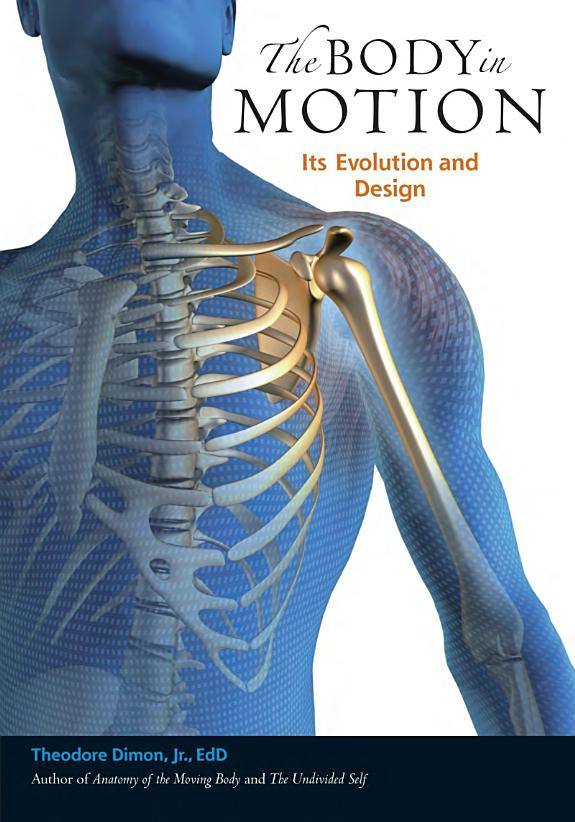
An anatomical exploration of the human body, accessibly written with 162 full-color illustrations for physical therapists, dancers, yoga teachers, and students This comprehensive guide demonstrates the functions and evolution of specific body systems, explaining how they cooperate to form an upright, intelligent, tool-making marvel, capable of great technological and artistic achievement. Enhanced with 162 beautifully rendered full-color illustrations, the book opens with an introduction to the origins of movement and a journey through time and evolution—from fish to amphibian, quadruped to primate—showing how humans became the preeminent moving beings on the planet. Further examining our upright support system, the book describes the purpose of: • The extensors, flexors, and spine • The importance of the shoulder girdle as a support structure for the arm • The hands and upper limbs • The pelvic girdle • The feet and lower limbs • Breathing • The larynx and throat musculature • The spiral musculature of the trunk It is our upright posture that makes it possible for us to move in an infinite variety of ways, to manipulate objects, to form speech, and to perform the complex rotational movements that underlie many of our most sophisticated skills. These systems, Dimon argues persuasively, have helped us build, invent, create art, explore the world, and imbue life with a contemplative, spiritual dimension that would otherwise not exist.








Reviews
Have you read this book?
Share a quick thought — even 1–2 sentences helps other readers.